
A Biscuit a Day: Providing School Children with the Nutrition they Need
August 29, 2024
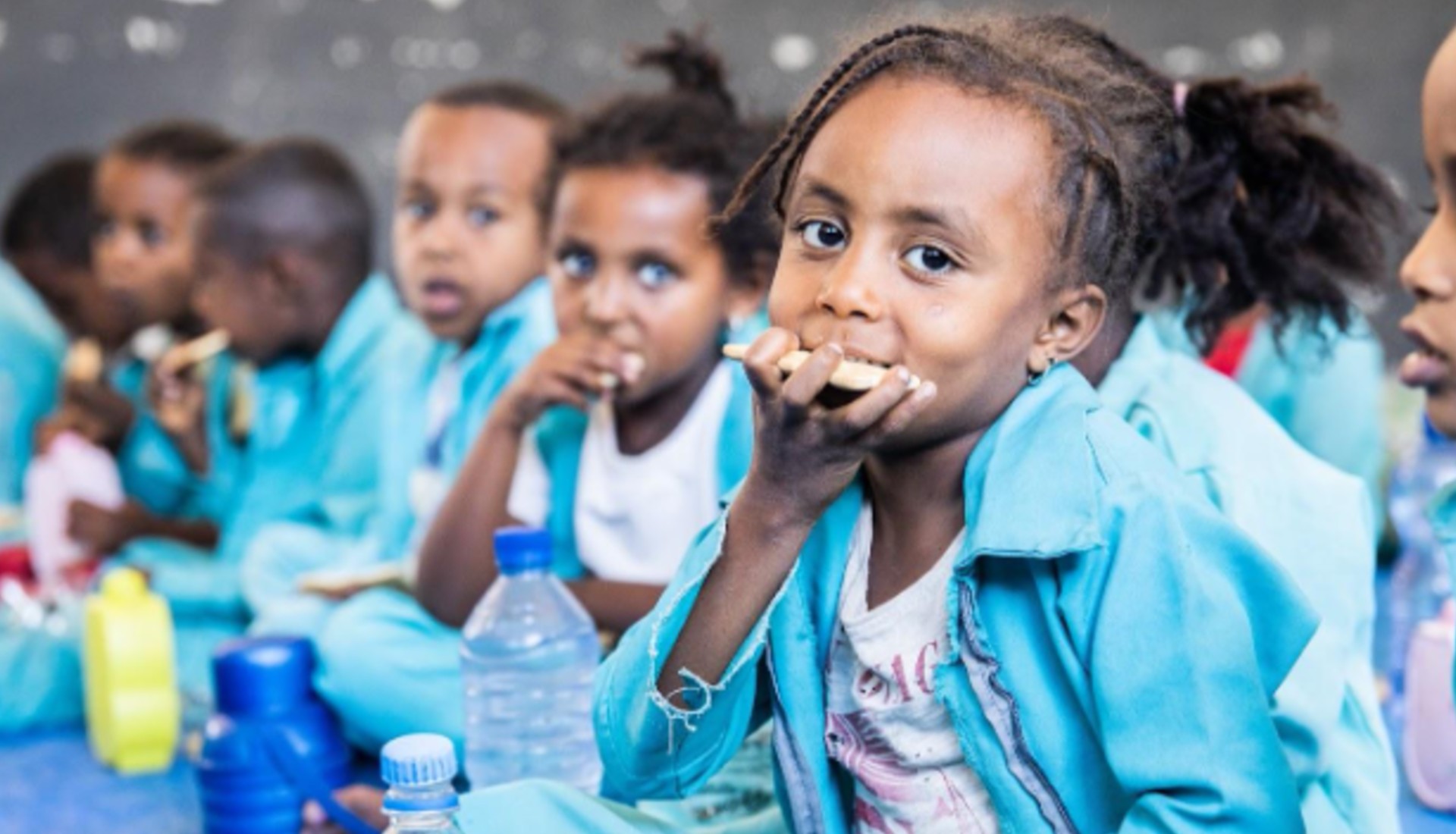
Alem, 5, eating a high-energy biscuit at school.
Thanks to ChildFund, with support from the International Rescue Committee (IRC) through the LEGO Foundation-funded Play Matters Emergency Response project, 291 children in Eshe’s preschool eat these biscuits every day. This has motivated more caregivers to enroll their children in preschool.
Eshe, just like the other children, loves the biscuits. “I really like these biscuits. They are sweet and crunchy. I don’t feel hungry when I eat them. And I always spare a few pieces for my small brother back at home,” she says.
Her classmates also love the biscuits..
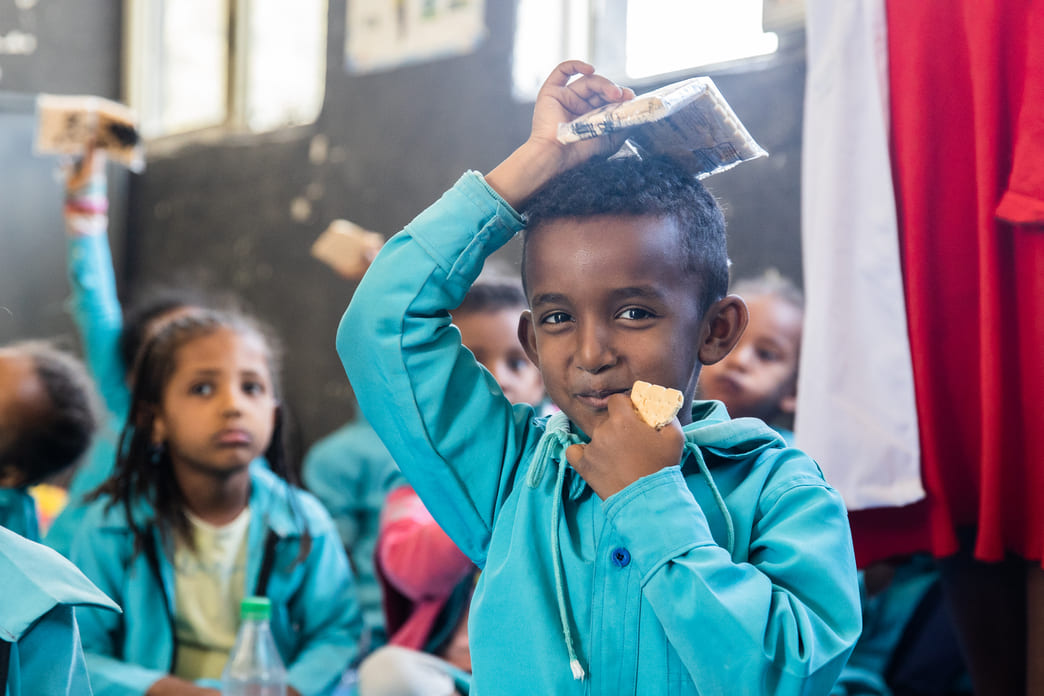
This biscuit feeding project aims to increase school enrollment and retention and improve nutrition for children from conflict-affected communities. This initiative began in November 2022 when schools reopened after a two-year closure following the conflict in Tigray Region which spilled over to the neighboring Amhara and Afar states. During this period, the school hosted internally displaced families.
The Play Matters Emergency Response project is being implemented in 10 schools (5 in Mersa and 5 in Woldia), supporting 10,136 students.
In addition to energizing the children, these specially manufactured biscuits have contributed significantly to increased school enrollment rates.
Mohammed Hussein, the school’s director said, “We have never had such a feeding program in the history of this school. The number of children increased since we started this project by 20% to 30%. Last year, we had 700 children in our primary school section, this number rose to 900 when we started this project. The number in preschool also rose from 180 to 291.”
According to Hussein, this school has the highest number of children from internally displaced families, compared to other schools in the South Wollo zone. Out of the 291 children in our preschool, 73 are from families that were displaced by the conflict,” he explained.
These high-energy wheat-based biscuits are fortified with extra vitamins and minerals. The ingredients include wheat flour, vegetable shortening, sugar, salt, sodium bicarbonate, ammonium bicarbonate, sodium metabisulphate, water, and organic preservative.
“I always like break time because we eat biscuits. When I eat them, I can play and not feel tired. They are so tasty. If we don’t eat the biscuits at school, we get hungry.” Negasi, 5, said
Teaching, Learning and Play Materials
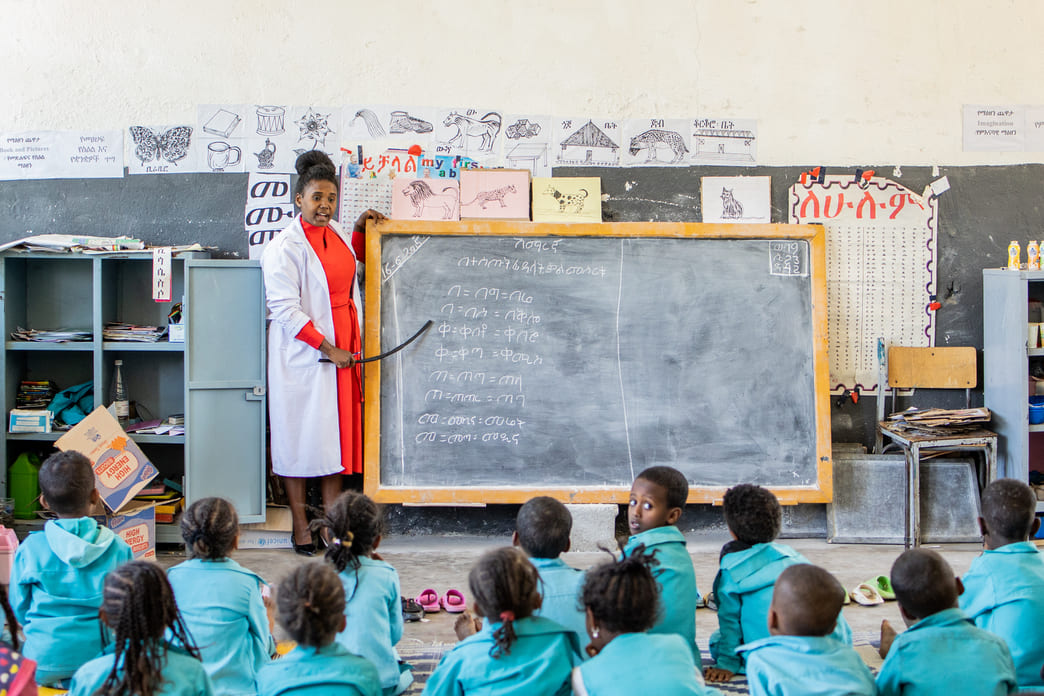
ChildFund also supported the school with learning, teaching and play materials. This initiative encourages the use of locally made learning materials that are fun, attractive, safe, low-cost, and developmentally appropriate. By engaging the school and community in the production of locally made learning materials, the project is also raising awareness of the importance of learning through play for children and promoting ownership and a sense of pride in the process.
“ChildFund has trained 240 teachers on learning through play techniques which is central to quality early childhood pedagogy and education. Play is one of the most important ways in which young children gain essential knowledge and skills. For this reason, we want teachers to understand the importance of having play opportunities and environments that promote play, exploration, and hands-on learning. This is especially important for these children who may have been affected by conflict in one way or another,” Sisay Worku, ChildFund Ethiopia Emergency Response Manager elaborated.
“Because of these teaching, learning and play materials, learning has become more interactive and fun. The children love their toys and enjoy participating in class activities. The best part is that these materials are easy-to-make, and we can make as many as we want if we work together with the parents,” preschool teacher Samira noted.
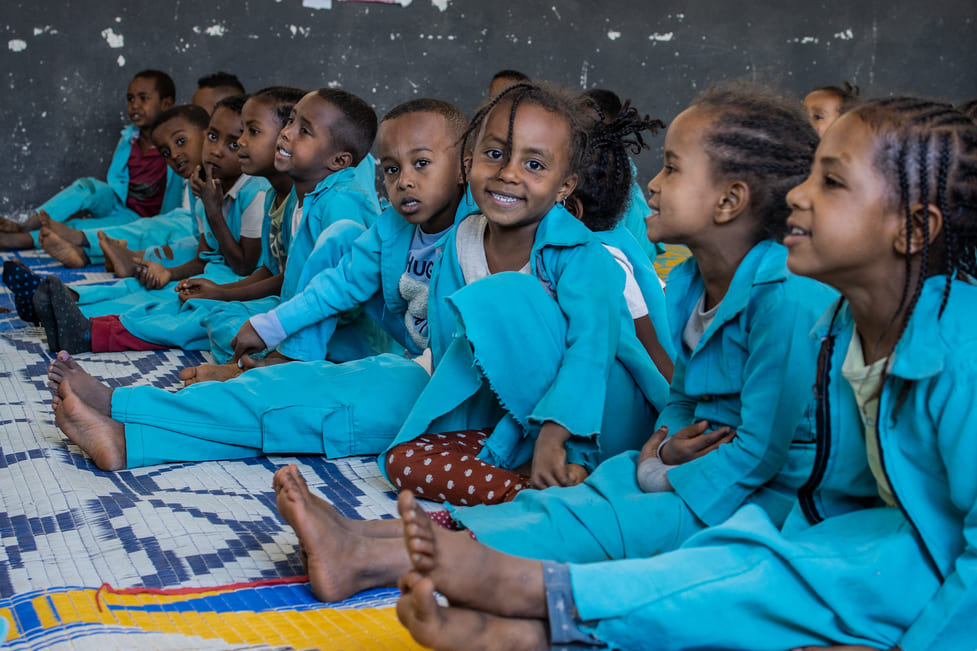
However, there is a dire need to support the school with child-friendly desks and chairs to provide a conducive learning environment. Currently, the children sit on the floor.
ChildFund also distributed school bags, books and stationery to all 900 children in the primary school.
Promoting Menstrual Health and Hygiene
This intervention is also expected to have a positive impact on the attendance of girls in school – ensuring that they do not miss out on school when they experience their monthly periods. Girls in the school are trained on menstrual hygiene management and receive dignity kits containing sanitary towels, soaps, and other personal hygiene items.
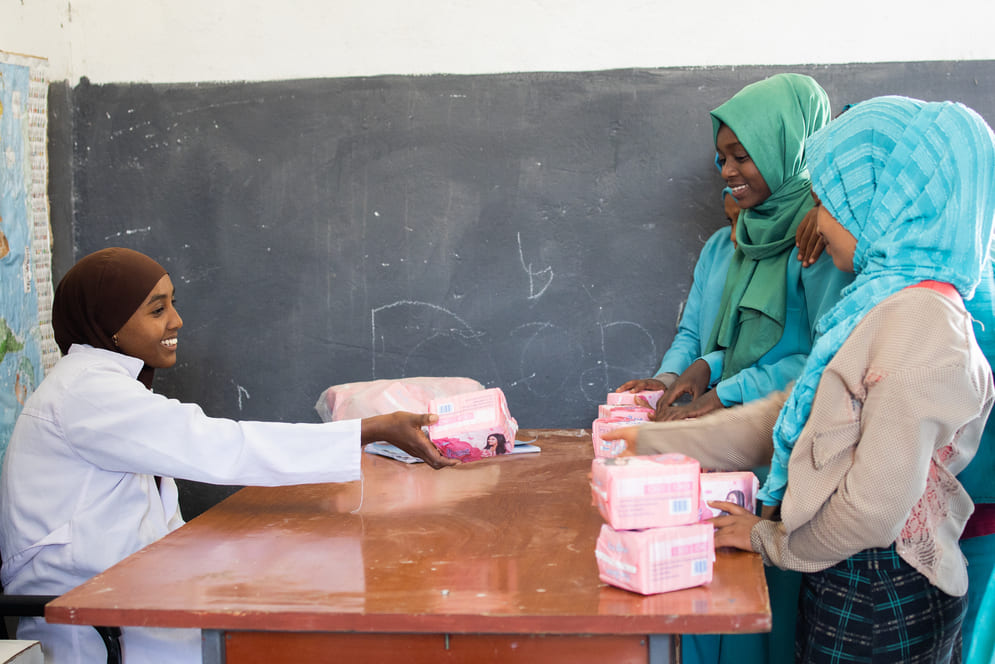
“Buying sanitary towels for me is the last thing my mother can think of right now. She is struggling to buy food to feed the whole family because we lost everything when we ran away because of the conflict.” Rabiya, 15, said. “So I was very happy when ChildFund gave me this kit.”
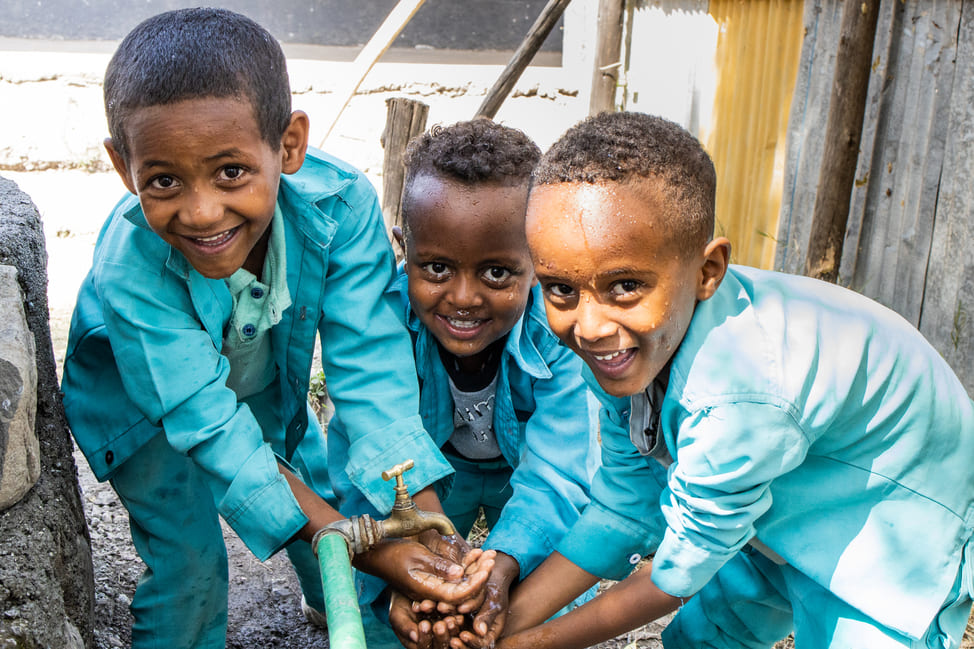
In order to improve sanitation and hygiene in schools, ChildFund is also fixing damaged water piping systems and constructing hand-washing stations in schools.
“For these children to start practicing how to write, they need desks. It is very uncomfortable to sit and write on the floor all day, every day,” Teacher Samira stated.
The Play Matters Emergency Response Project
ChildFund is working with various partners to support children living in conflict with educational support, including the rehabilitation of schools, and providing furniture and scholastic materials so that children no longer miss out on their right to an education.
This includes the ongoing International Rescue Committee-funded Play Matters project which is being implemented in 10 schools (5 in Mersa and 5 in Woldia), supporting 10,136 students.
This project is supporting internally displaced persons (including children), returnees and host communities affected by war and displacement, with interventions in education (school rehabilitation, furnishing learning spaces, providing scholastic materials, uniforms), water, sanitation, hygiene, child protection, health and nutrition.
SHARE:




Related Resources