Select Program
Child Protection
Education
Emergency Response
Youth Development
Water, Sanitation & Hygiene
Health & Nutrition
Food Security
Environmental Sustainability
Child Sponsorship
Early Childhood Development
Localization
Select Type
Capacity Statement
Journal Article
Manual, Toolkit or Guide
Policy Brief
Project Brief
Report
Research
Select Year
2025
2024
2023
2022
2021
2020
2019
Select Region
Addis Ababa City
Countrywide

2023

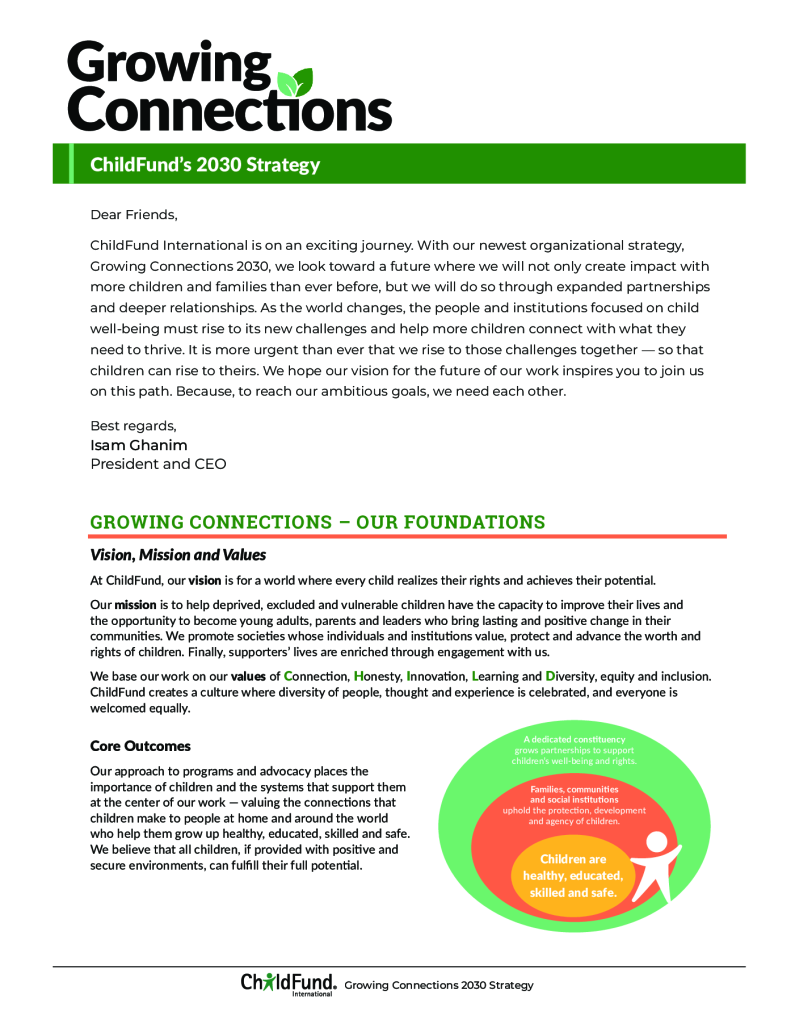
ChildFund International is on an exciting journey. With our newest organizational strategy, Growing Connections 2030, we look toward a future where we will not only create impact with more children and families than ever before, but we will do so through expanded partnerships and deeper relationships. As the world changes, the people and institutions focused on child well-being must rise to its new challenges and help more children connect with what they need to thrive. It is more urgent than ever that we rise to those challenges together — so that children can rise to theirs. We hope our vision for the future of our work inspires you to join us on this path. Because, to reach our ambitious goals, we need each other.

2020

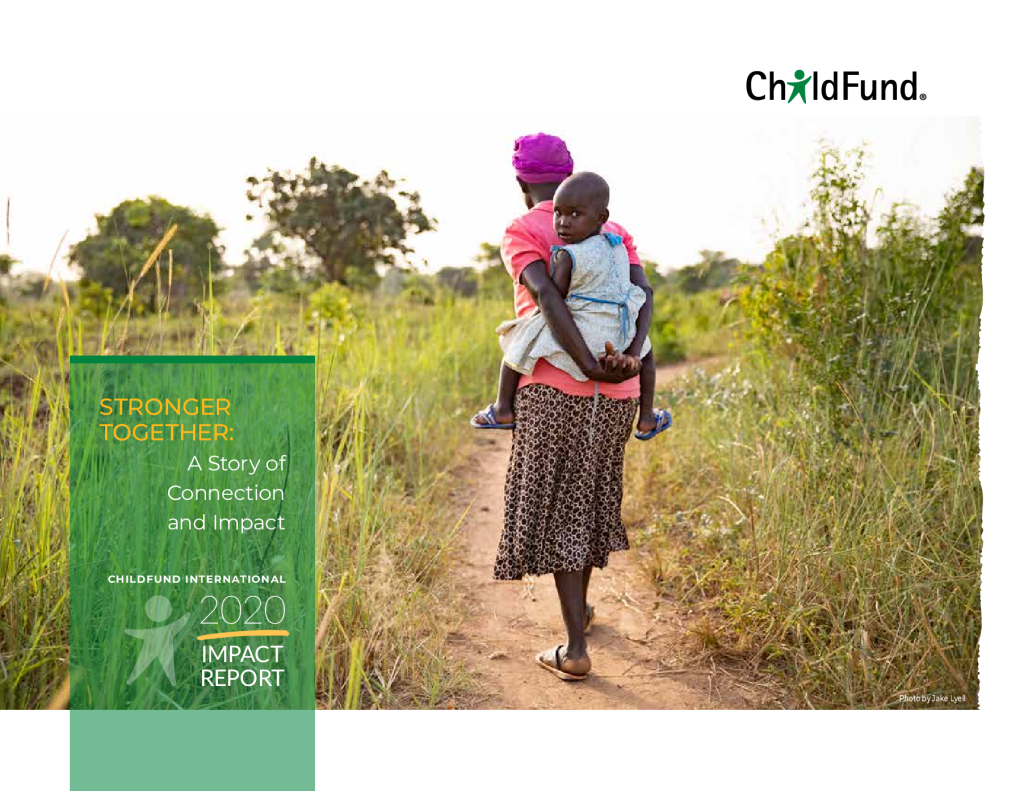
At ChildFund, we characterize our impact in Africa, Asia, and the Americas using four key dimensions: (1) the positive change we see in our core outcomes as measured by performance data — our global monitoring of key indicators and our programming evidence; (2) by the feedback we receive from children, families, sponsors, partners, and stakeholders on how our work with them has made a positive difference in their lives — and in their communities; (3) how we apply learning about what works well and does not work well in our programs and strategies to improve outcomes; and (4) how we contribute to global, collective outcomes for children and their families — the Sustainable Development Goals (SDGs).


2023

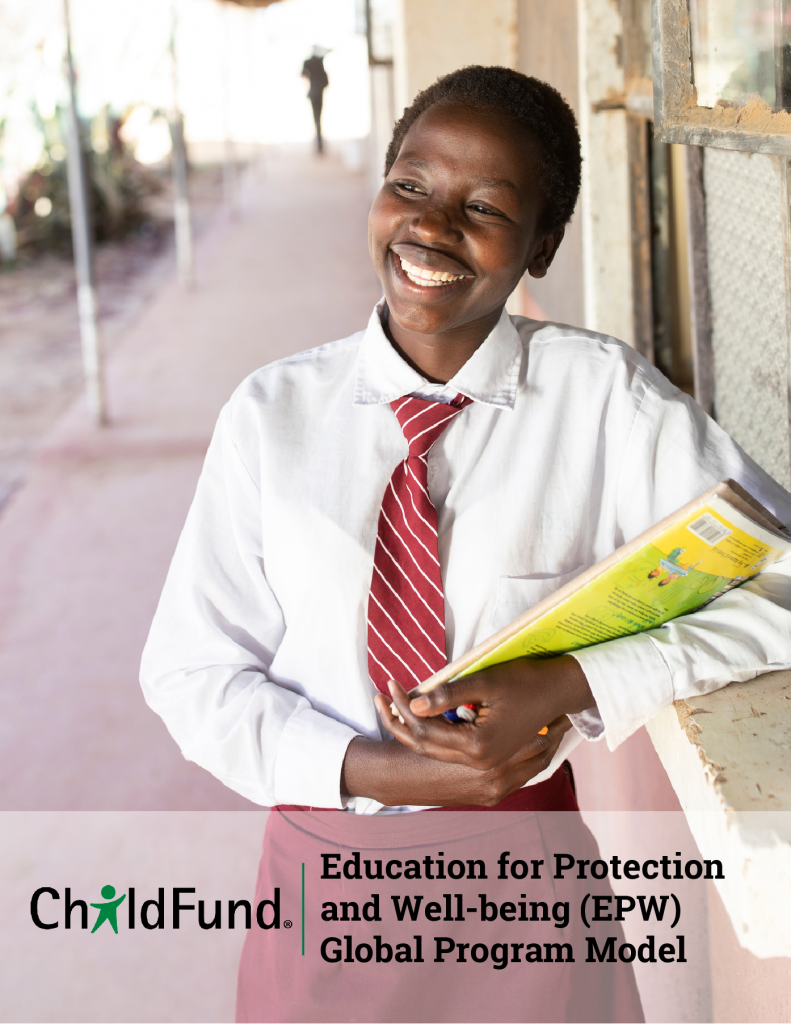
ChildFund’s Education for Protection and Wellbeing (EPW) Model Model targets children ages 6-12, their teachers and their caregivers, over a two-year period in schools. The EPW model places a strong emphasis on improving relationships within and between levels of the ecological model among children, caregivers,and teachers.

2023

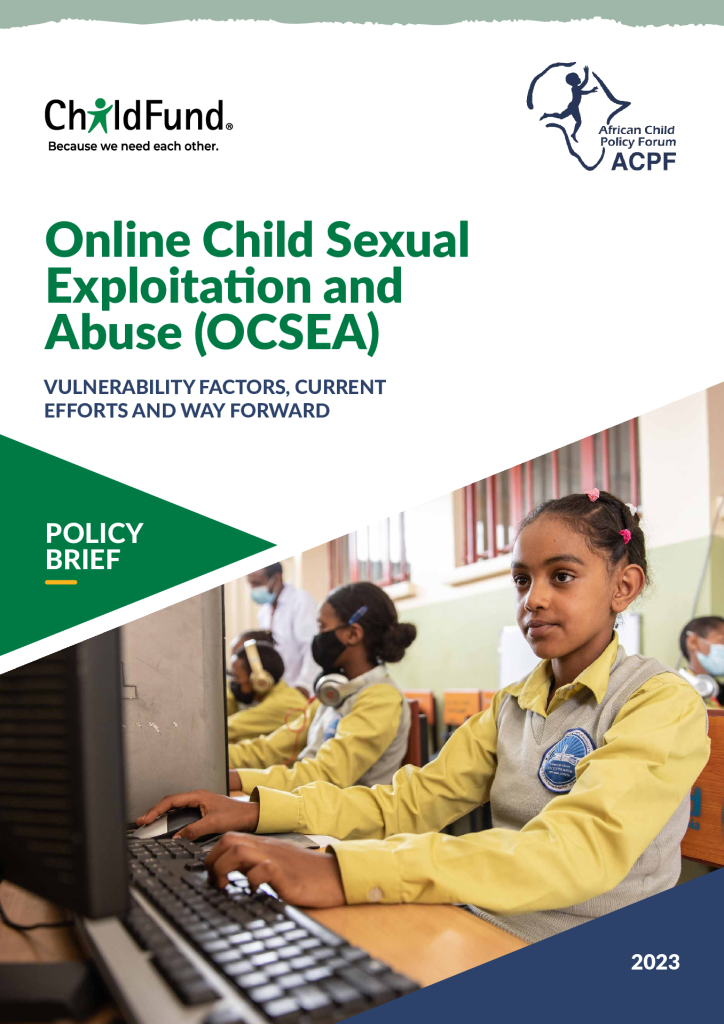
This Policy Brief, prepared by ChidFund, in collaboration with the African Child Policy ForumInternational, is a succinct summary of two extended policy briefs on the scale, drivers and impact of online sexual exploitation and abuse of children and programmatic, policy efforts and gaps, respectively.

2023

This brief, prepared by African Child Policy Forum, in collaboration with ChildFund, is the first in a series of two policy briefs. This series focuses on the nature, scale and impact of the growing problem of technology-facilitated sexual abuse and exploitation of children in Africa, including Ethiopia.

2023

The internet has offered countless opportunities for children for learning, for networking and for recreation, among others. But it has also presented challenges that are very subtle, fast-evolving and hard to contain. One such challenge that African governments and other stakeholders are struggling with is the online sexual abuse and exploitation of children. This brief focuses on policy measures and gaps in policies, legislations and standards, governance structures and coordination and programmes and services related to online sexual exploitation and abuse of children in Africa.

2023

ChildFund integrates child protection as a core, cross-cutting theme across all its programs, with the Community-Based Child Protection Mechanism (CBCPM) serving as a key strategy.

2023

ChildFund will ensure timely administrative investigations of all allegations or incidents of a safeguarding nature reported through ChildFund’s established reporting mechanisms.