Select Program
Child Protection
Education
Emergency Response
Youth Development
Water, Sanitation & Hygiene
Health & Nutrition
Food Security
Environmental Sustainability
Child Sponsorship
Early Childhood Development
Localization
Select Type
Capacity Statement
Journal Article
Manual, Toolkit or Guide
Policy Brief
Project Brief
Report
Research
Select Year
2025
2024
2023
2022
2021
2020
2019
Select Region
Addis Ababa City
Countrywide

2024

This annual report highlights progress made to advance the wellbeing, protection, and rights of children and young people across our program areas in Ethiopia. It presents key achievements in education, child protection, health and nutrition, water and sanitation, livelihoods, youth development, humanitarian assistance, and environmental sustainability and resilience, while reflecting on challenges encountered and lessons learned in a changing operating environment.

2025

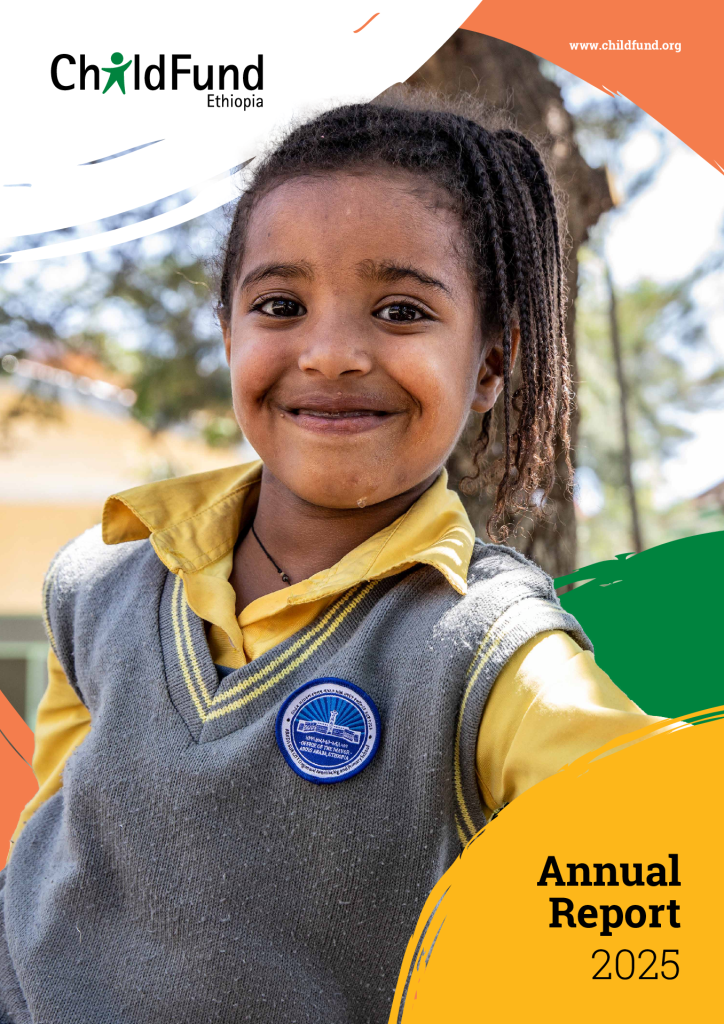
This annual report 2025 highlights progress made in 2025 to advance the wellbeing, protection, and rights of children and young people across our program areas in Ethiopia. It presents key achievements in education, child protection, health and nutrition, water and sanitation, livelihoods, youth development, humanitarian assistance, and environmental sustainability and resilience, while reflecting on challenges encountered and lessons learned in a changing operating environment.

2025

This annual report 2025 highlights progress made in 2025 to advance the wellbeing, protection, and rights of children and young people across our program areas in Ethiopia. It presents key achievements in education, child protection, health and nutrition, water and sanitation, livelihoods, youth development, humanitarian assistance, and environmental sustainability and resilience, while reflecting on challenges encountered and lessons learned in a changing operating environment. The report also outlines our partnerships, program approaches, and use of resources, demonstrating how ChildFund worked with communities, government, and partners to deliver accountable, locally led, and sustainable results for children and their families.


2024

This policy brief argues that affordable, community-based childcare centres can significantly reduce women’s unpaid care burden in Ethiopia, enabling them to participate more fully in paid work and improve their economic wellbeing. Drawing on evidence from a ChildFund Ethiopia–led initiative, it shows that access to reliable childcare allows women to seek better jobs or grow small businesses, while also supporting children’s early development. The brief calls for greater investment in community childcare as part of gender-responsive economic and social policy.

2024

This journal article examines how early childhood development (ECD) relates to the empowerment of women living in urban poverty in Ethiopia, finding that developmental delays in children aged 12 to 36 months are widespread and significantly more common among children of less empowered mothers. Using direct developmental screening across key domains (communication, motor, problem solving, personal-social), the analysis shows that lower levels of women’s decision-making power and control over resources are linked with higher odds of poor child development outcomes even after accounting for household and maternal factors, suggesting that strengthening women’s empowerment could be an effective strategy to improve ECD outcomes.

2023

This article examines how young children’s nutritional status in urban Ethiopia relates to their early childhood development, using data on children aged 12 to 36 months. It reveals that delays in development, particularly in fine motor, gross motor and problem-solving skills, are common, and that children who are stunted or underweight are significantly more likely to show these delays compared with children with normal growth measurements. The findings suggest that improving nutrition, through coordinated interventions in health, education, women’s affairs and social protection, can support better child development outcomes alongside broader nurturing care practices.

2023

Since the aforementioned systematic review was compiled, several other working papers have emerged, examining the impacts of community-based daycare in rural Democratic Republic of Congo, ‘mobile creches’ in Burkina Faso and childcare vouchers alongside cash transfers in Uganda

2023

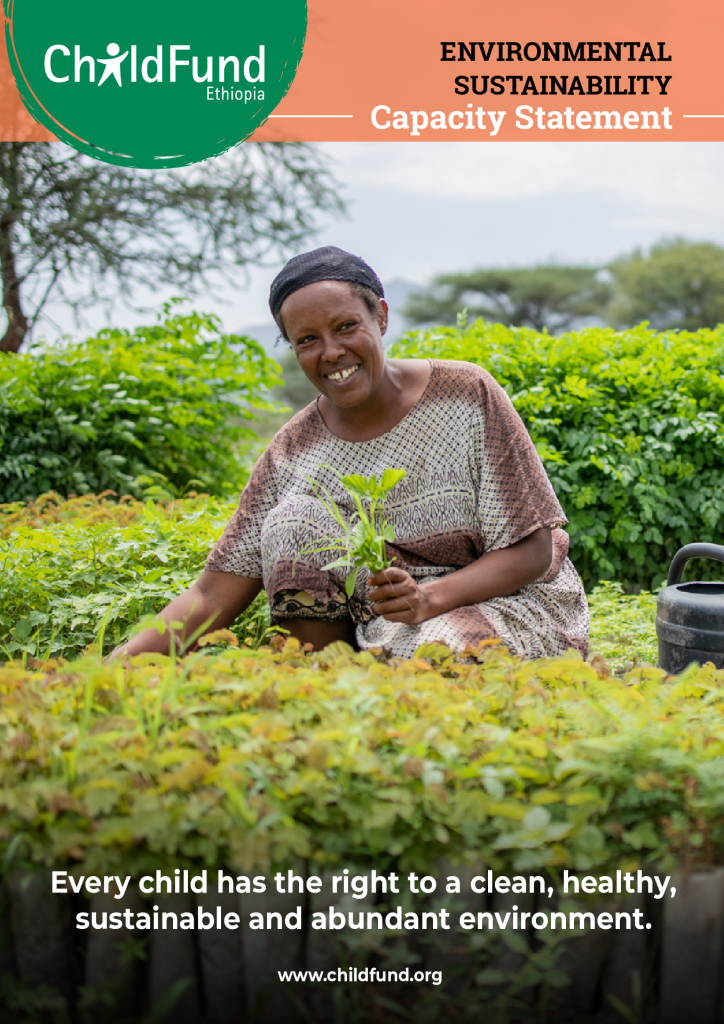
ChildFund recognizes that environmental changes are not only ecological challenges but also a serious child rights crisis, directly threatening children’s survival, development and future. In response, we implement child-centered, locally-led programs aligned with Ethiopia’s national strategies complementing; the Climate Resilient Green Economy (CRGE) strategy and the National Adaptation Plan (NAP), by scaling up community action to reach the nation’s goal of carbon neutrality by 2030. Our initiatives also support the Long-Term Low Emission and Climate Resilient Development Strategy (LT-LEDS) 2050, and the Green Legacy Initiative (GLI), a national reforestation campaign. This capacity statement presents a snapshot of our work to build environmental sustainability among vulnerable populations, particularly children and their families.